

Dr. Deborah Zelinsky
Deborah Zelinsky, O.D. is an optometrist noted worldwide for her work in neuro-optometric rehabilitation. She serves as founder and research director of the Mind-Eye Institute, based in Northbrook, Illinois. The Institute provides a platform for her to continue studies of how changes in ambient lighting affect brain function which impacts a person’s spatial awareness, movement, and selective attention to sound. Her global reputation is due, in part, to her development of the Z-Bell Test?, a revolutionary method of evaluating a patient’s overall spatial processing and ability to integrate retinal signals with perception of auditory space. The test allows Dr. Zelinsky and her team to prescribe lenses and other optometric interventions that normalize the balance between central and peripheral receptors in the retina, while enhancing the interaction between eyes and ears. Studies show that autistic children do not synchronize eyes and ears, and in the upcoming second edition of “Outsmarting Autism”, Patricia Lemer mentions the Z-Bell? testing. In addition to her work with the Mind-Eye Institute, Dr. Zelinsky is a fellow in both the College of Optometrists in Vision Development and the Neuro-Optometric Rehabilitation Association, a member of the Society for Brain Mapping and a community leader for the Society of Neuroscience.

Dr. Glenn Steele
Dr. Glen Steele, a Professor of Pediatric Optometry at the Southern College of Optometry in Memphis, places a special emphasis on the vision care needs of the infant and child. Following graduation from SCO, he completed a fellowship at the prestigious Gesell Institute of Child Development. A past president of both the College of Optometrists in Vision Development and the Optometric Extension Program Foundation, and past chair of the American Optometric Association InfantSEE:registered: Committee, he is also a member of the Continuing Education Committee for SECO International. Dr. Steele holds fellowship in the College of Optometrists in Vision Development and the American Academy of Optometry and has been inducted into the National Academies of Practice.
He has served the AOA, SECO International, COVD and the OEPF in many capacities. He has lectured extensively throughout the US and internationally in the area of vision development and care in the infant and young child. He has presented oral and poster presentations at a number of multi-disciplinary meetings.
Dr. Steele has been selected as Tennessee’s Optometrist of the Year, one of Optometric Management’s Top Ten Optometrists of the Decade, and the G.N. Getman Award from the College of Optometrists in Vision Development. He was awarded Southern College of Optometry’s Lifetime Achievement Award in 2001. He has been a Behavioral Scholar in Residence at the New England College of Optometry. Dr. Steele also received Prevent Blindness Tennessee’s Lifetime of Service Award, the John Streff award from Neuro-Optometric Rehabilitation Association, and the Armand Bastien Award for International Accomplishments in 2010 and the Skeffington Alexander Award in 2014 from the International Congress of Behavioral Optometry. In 2011, he was awarded the William Feinbloom Award from the American Academy of Optometry. He has been presented the Visionary Award by the Tennessee Public Health Association and the Distinguished Service Award from the American Public Health Association Vision Care Section in 2018.
The Fors/Steele Developmental Vision Endowed Scholarship has been established jointly in his name along with the late L. Allen Fors, O.D. at the Southern College of Optometry.
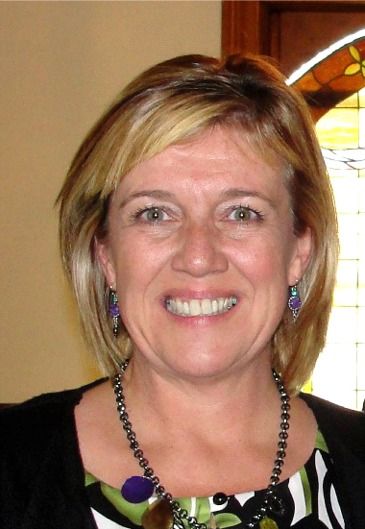
Karen M. Fairley
Karen “Cari” Fairley is an elementary school educator with more than 25 years experience in three boards of education in Ontario, Canada. For 12 years, she taught junior and senior kindergarten with what is now the Toronto Board of Education. She was a Grade 2 at Peel Region Board of Education. In the Greater Essex Country District School Board, she taught Primary vocal music for two years. After again teaching Grade 2, Cari was the art teacher. Currently, she teaches Grade 5.
She is an advocate of teaching through the arts. In 2005, she was featured on a DVD called, “Bringing Curriculum to Life.” Her classrooms always feature large displays to encourage creativity and engagement with her students. “True Treasure,” a picture book that she created with her Grade 2 class was published by her Director of Education. Each of the students received a copy, along with a copy for the school library, the principal, superintendent, trustees, the provincial Minister of Education, and also the Premier of Ontario.
In 2018, Cari received an honor from the Mayor of Windsor’s first, “Community Champion Award.” The award recognized her contributions to her community through her teaching and for a nutrition partnership she fostered with local churches. Her inner-city school has for the past ten years benefited from an additional snack of fresh fruits and vegetables.
Cari enjoys being an associate teacher with student teachers from the faculties of education from the University of Toronto, Queen’s University, York University, the University of Western Ontario, Brock University, and the University of Windsor. She is also a senior teacher mentoring new teachers.
In addition to teaching, Cari is a corporate seminar speaker, enjoys painting on natural elements such as rocks and driftwood, and is a church soloist.
She, and her husband, Grant, live in Ontario, Canada.

Photo by Rosalie Winard
Sue Barry, PhD (“Stereo Sue”)
I was born on February 20, 1954, and grew up in Connecticut with my brother and sister, a father who was an artist, and a mother who was a history professor. I attended college at Wesleyan University in Middletown, Connecticut, the same town where my great grandfather had settled and started a clothing store. After receiving my BA in biology in 1976, I moved south to Princeton University where I earned my MA in biology in 1979 and PhD in biology in 1981.
I have worked as a research neuroscientist at the University of Miami Medical School in Florida, the University of Michigan in Ann Arbor, NASA’s Johnson’s Space Center in Houston, Texas, and the Marine Biological Laboratory in Woods Hole, Massachusetts. In 1992, I became a Professor of Biological Sciences and Neuroscience at Mount Holyoke College and retired in 2016.
At age 2, before she had an operation to treat her crossed eyes. By the time of her surgery, her brain had already been wired to see in two dimensions instead of three.
I have been cross-eyed since early infancy and had three surgeries as a child that made my eyes look more or less straight. However, I did not develop stereovision until age 48 when I underwent optometric vision therapy under the guidance of a developmental optometrist. At first, I assumed that no one would believe my vision story. According to conventional wisdom, stereovision must develop during a critical period in early childhood or it is lost forever. Indeed, I used to teach my students this theory in class. So, for almost three years, I kept my visual improvements to myself, but one evening in December, 2004, I decided that the change in my vision was so remarkable that I had to write down my story in narrative form. As luck would have it, that evening my husband and kids got involved in a late night Monopoly game so I retired to a quiet room in our house and wrote a very long letter about my vision to the well-known neurologist and author, Dr. Oliver Sacks.
Dr. Sacks came to visit me and my developmental optometrist, and in June 2006, he published a New Yorker article about me called “Stereo Sue.” The title of the article became my nickname, and the name has stuck ever since.
One week after “Stereo Sue” was published, I was interviewed on NPR’s Morning Edition, and the emails starting pouring into my Inbox. Most of the emails were written by individuals with vision disorders, particularly strabismus (misaligned eyes) and amblyopia (lazy eye). The frustrations, concerns, and hopes for better vision expressed in all the emails inspired me to continue my research on the topics of binocular vision and optometric vision therapy and to write my book, Fixing My Gaze: A Scientist’s Journey into Seeing in Three Dimensions.
My husband, Dan Barry, and I have two grown children. From 1992 to 2005, Dan was a NASA astronaut and flew on three Space Shuttle missions. It was an incredible thrill to stand on the roof of KSC’s Launch Control Center and watch Dan blast off into space. Even so, these earthshaking experiences pale in comparison to first seeing the world in stereo depth!

Dr. WC Maples
Dr. Maples received his BS in geography and chemistry from the University of Southern Mississippi (USM)in 1964 and his Doctor of Optometry from Southern College of Optometry (SCO) in 1968. His Master of Science in Community Health Education was earned in 1977 from USM.
He began a general practice of optometry in Wiggins, Mississippi from 1968 to 1980. He also began a specialty practice in vision development and vision rehabilitation in Gulfport, Mississippi in 1972. After starting cold and building these two practices, he subsequently sold both practices in 1980 to accept a position at Northeastern State University: Oklahoma College of Optometry (NSU-OCO) in 1981. He designed the vision therapy clinic and protocol for the college clinic that was housed in the WW Hastings Indian Hospital in Tahlequah, Oklahoma. He served as the chief of clinic for 15 years. He retired from NSU-OCO in 2006 as a professor emeritus. He later accepted a clinical professorship at his alma mater (SCO) and served there for 5 years before retiring to Hattiesburg, Mississippi in 2011.
Dr. Maples is a Fellow of the American Academy of Optometry (AAO); a Fellow of the Australasian College of Behavioral Optometry (ACBO)and a Fellow of the College of Optometrists in Vision Development (COVD). He earned his FCOVD in 1972 and is the oldest active fellow member of this board certifying organization.
Dr. Maples has served on the Board of COVD with two years as president of this organization. He has served on the International Examination and Certification Board (IECB) of COVD on several occasions with 3 years as the Chair of the IECB.
He has always been active in research as well as clinic and is well published in many peer reviewed journals both domestically and internationally. He was awarded a lifetime achievement award from SCO in 2011. In addition, he serves his community. He was president of the Tahlequah Kiwanis club and a member for 24 years. He was voted Citizen of the Year for this city. As a Marine, he has been active in the United States Marine Corps League for 20 years. He has also been active in his churches, being a Sunday School teacher for 30+ years.
He has lectured and does lecture domestically and internationally on every continent except Antarctica.
Privately, he is married with 3 adult children, 8 grandchildren and 2 great grandchildren. He enjoys travel, sailing (as a deck hand) and gardening.